Design & Decor · 6 min ·
Designing a Stage That Photographs, Not Just One That Looks Good in Person
The couple sees the stage once. Everyone else sees it forever, through a lens. Designing for both is a discipline, not a compromise.
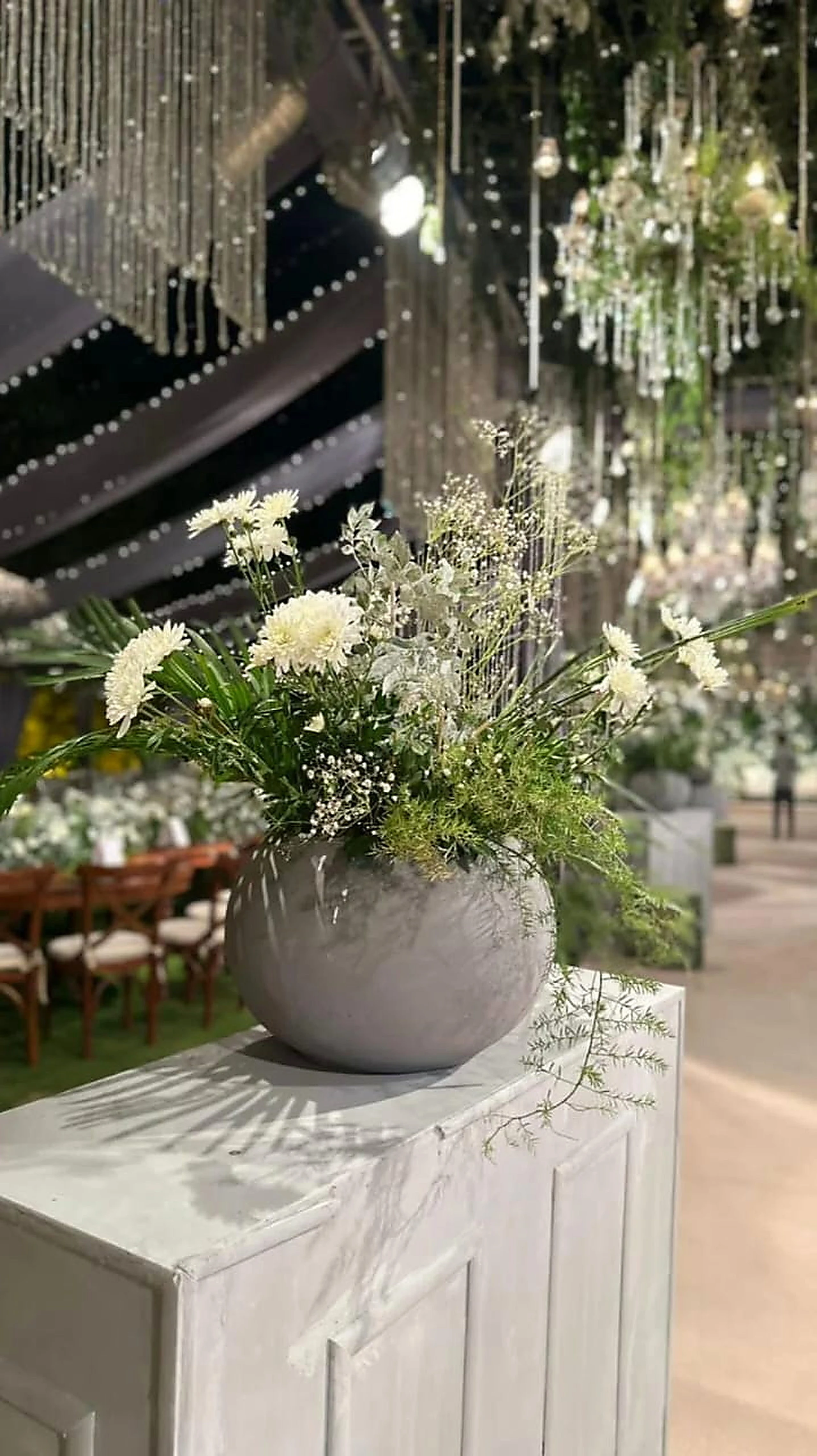
The stage is the most photographed object of a Pakistani wedding, and most stages are designed as if they will only ever be looked at directly.
Mistake one: wrong proportion for the room
A stage drawn without measuring the ceiling reads as either overwhelming or apologetic. We draw every stage against the actual room elevation and the seated eyeline of the furthest guest.
Mistake two: no depth
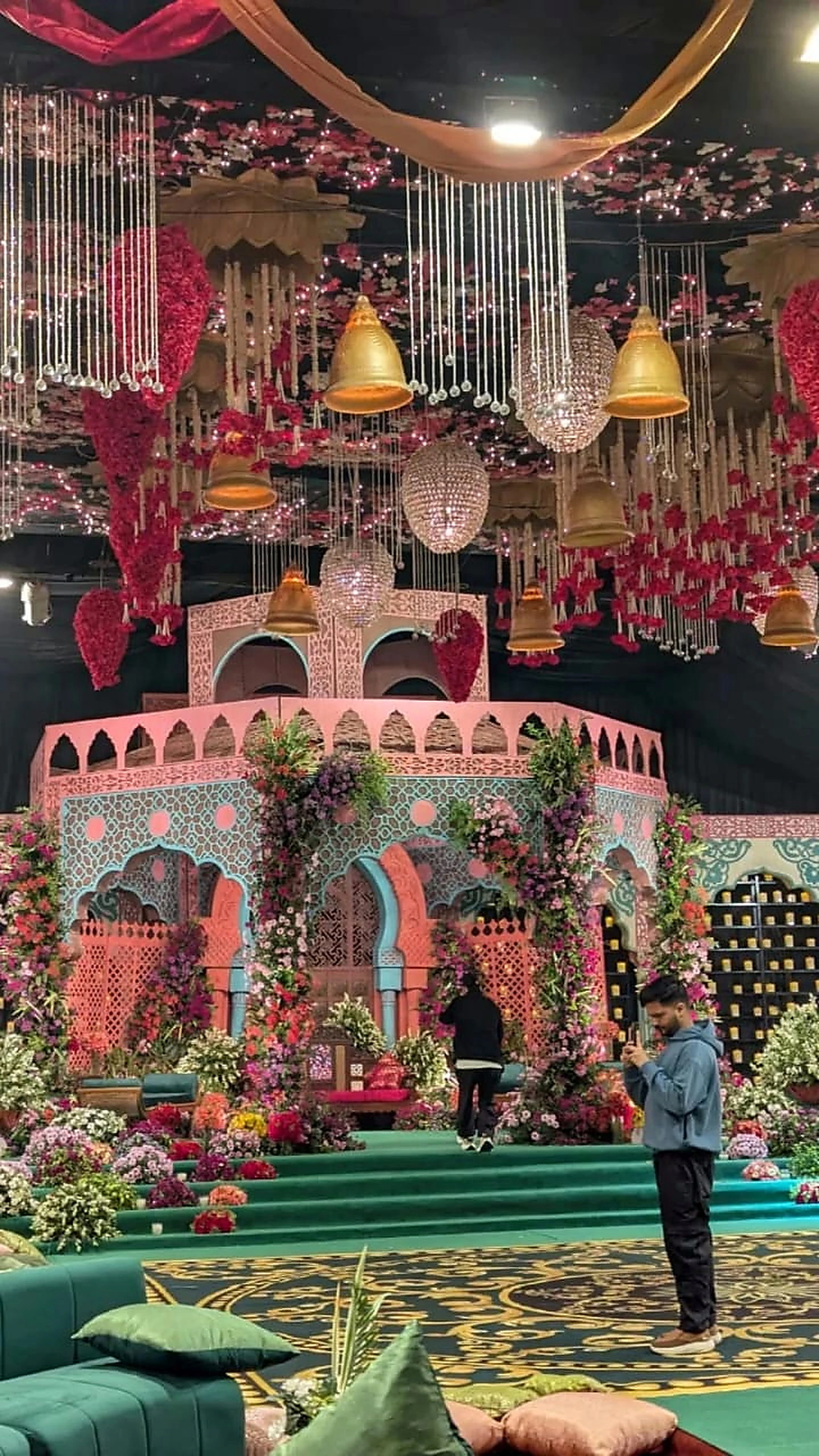
A flat wall gives light nothing to fall across, so the camera records it as a colour field. Depth — recesses, layered arches, foreground florals — is what produces shadow, and shadow is what makes a photograph look three-dimensional.
“Design the stage for the frame it will live in, and the room takes care of itself.”
Mistake three: a busy centre
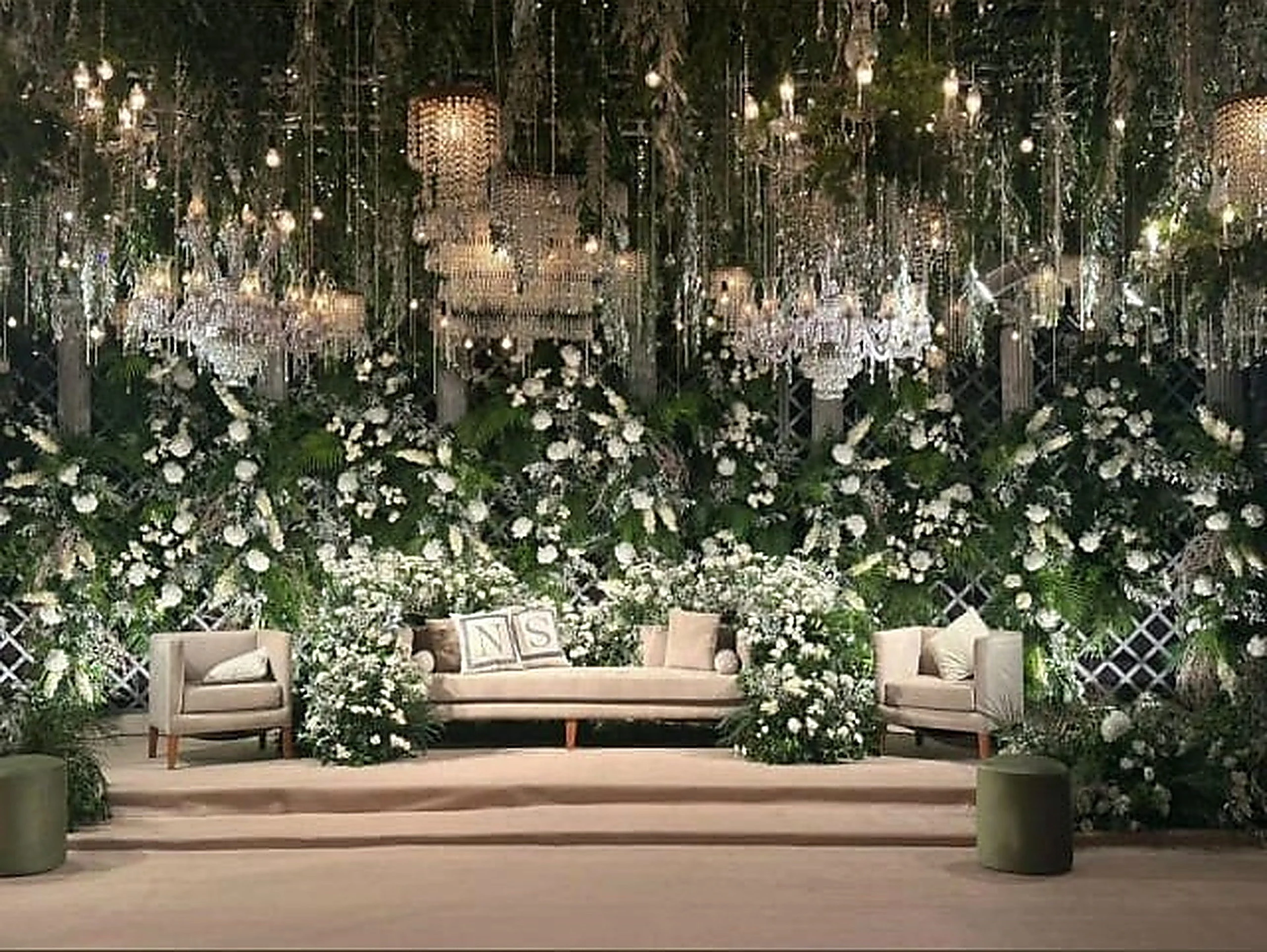
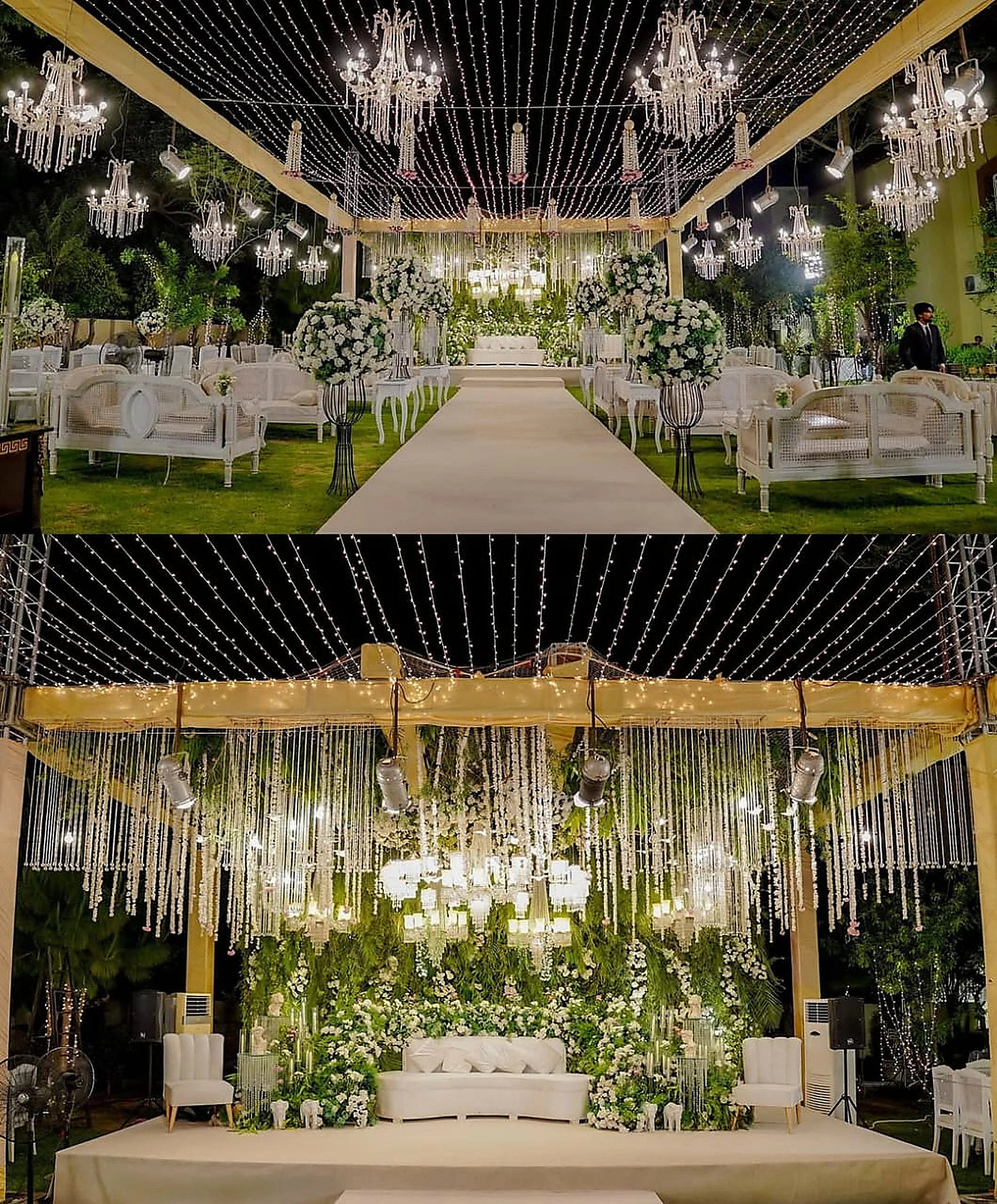
The couple must read clearly. Anything intricate directly behind their heads competes with their faces in every single frame.
Keep the centre calm and let the complexity live at the edges.
Lighting is the design, not the finish
Key, fill and separation lighting tested against real skin tones before the event. A flat wash from the front flattens everyone and turns warm decor grey.
We share the lighting plot with the photographer in advance, because the person shooting into it should know what they are shooting into.